The Real AI Jobs Number in the Philippines — And What We Should Do About It
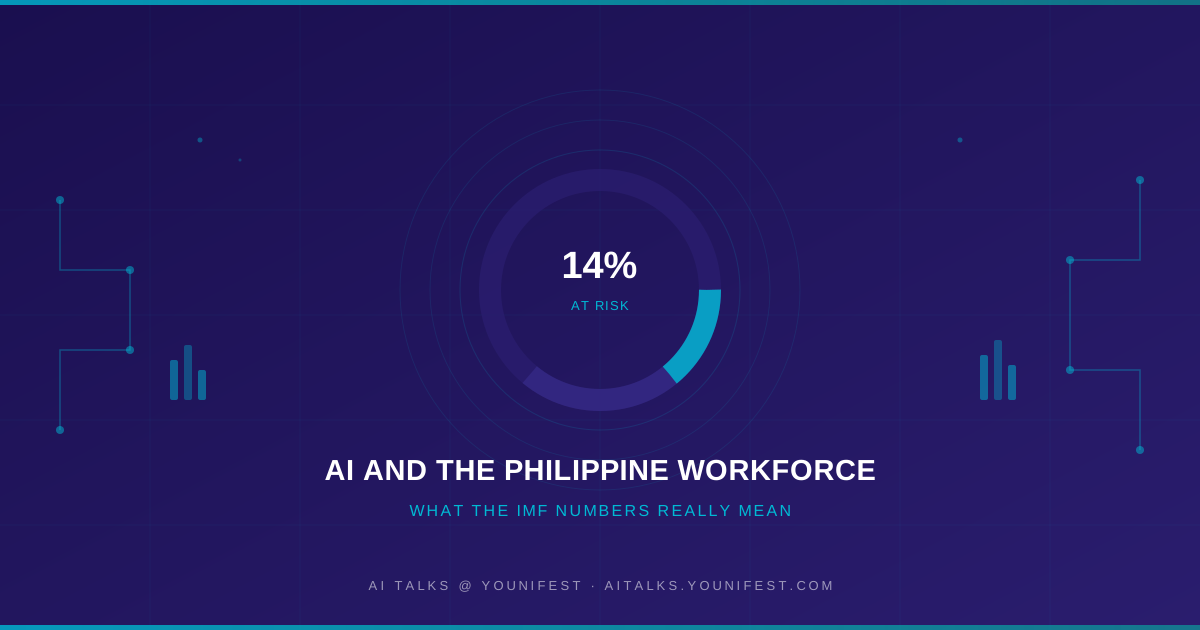
The International Monetary Fund says 14% of Philippine jobs are at risk of being replaced by AI — and Doc Ligot, one of the country’s leading AI ethics advocates, says the industry isn’t being straight with you about it.
The Weekly Headline: The Real AI Jobs Number in the Philippines — And What We Should Do About It
If you’ve been waiting for a clear, honest answer about what AI will do to jobs in the Philippines, you’ve probably been disappointed. Keynote speakers hedge. Press releases celebrate “opportunity.” The real numbers get buried in footnotes.
Doc Ligot isn’t doing that.
In a recent post that cut through the usual corporate spin, Dominic “Doc” Ligot — data scientist, AI ethics advocate, and one of the most cited Filipino voices on responsible technology — spelled it out plainly: “The International Monetary Fund says 14% of jobs in the Philippines are at risk. This is based on exposure and complementarity.”
What the Numbers Actually Mean
The IMF framework works in two layers. First, exposure: how much of a given job can AI already do? Then, complementarity: does AI help that worker become more productive, or does it simply replace them?
The headline figure — 36% of Philippine jobs are “highly exposed” to AI — sounds alarming. But once you factor in complementarity, the picture sharpens: roughly 14% of the total workforce faces genuine displacement risk. That’s not a small number. It represents millions of Filipinos, concentrated heavily in the BPO sector, administrative roles, and data-entry work — jobs that have long been a cornerstone of the Philippine economy.
The gender dimension is equally sobering. According to IMF research, approximately half of all jobs held by women in the Philippines are highly exposed to AI disruption, compared to roughly a quarter of jobs held by men. This isn’t a technical footnote — it’s a structural equity issue that demands a policy response.
Philippines Is Stepping Up — But Is It Fast Enough?
The good news: the Philippine government isn’t ignoring this. As the 2026 ASEAN Chair, the Philippines has made ethical AI governance a centerpiece of its regional agenda. Under the banner of “AI for Good,” the country is championing a Southeast Asian regulatory framework that prioritizes fairness, accountability, and human oversight — not just economic efficiency.
Multiple bills for a Philippine Council on Artificial Intelligence (PCAI) have been filed in both chambers of Congress. CHED, the Commission on Higher Education, held its inaugural RAISE convention in February to embed AI literacy into universities nationwide. These are meaningful moves.
But legislation and conventions take time. Workers whose livelihoods are disrupted right now can’t wait for committee reports.
What Doc Ligot Is Saying That Others Won’t
This is where voices like Doc Ligot’s matter most. As the featured speaker at AI Talks @ Younifest and a sought-after resource for organizations navigating AI responsibly, Doc has consistently pushed past the optimism to ask: who gets left behind, and what are we prepared to do about it?
His upcoming webinars — details at aitalks.younifest.com — tackle exactly this kind of question: not just how to adopt AI, but how to adopt it in ways that don’t quietly transfer risk onto the most vulnerable workers.
The 14% figure isn’t a scare tactic. It’s a planning number. And the organizations and individuals who take it seriously now will be the ones with options later.
AI isn’t coming. It’s here.
The question was never whether AI would reshape the Philippine workforce. The question is whether Filipinos will be informed participants in that reshaping — or surprised by it. Getting honest about the numbers is step one.
Further Reading
- Doc Ligot on AI and jobs in the Philippines — X (Twitter)
- IMF sees 36% of PH jobs eased or displaced by AI — Philippine Daily Inquirer
- AI Job Disruption: What’s Hype, What’s Real and What Can the Philippines Do About It — Rights Report
- PH to promote ethical AI use as 2026 ASEAN Chair — Philippine News Agency
About Doc Ligot:
Dominic “Doc” Ligot is one of the leading voices in AI in the Philippines. Doc has been extensively cited in local and global media outlets including The Economist, South China Morning Post, Washington Post, and Agence France Presse. His award-winning work has been recognized and published by prestigious organizations such as NASA, Data.org, Digital Public Goods Alliance, the Group on Earth Observations (GEO), the United Nations Development Programme (UNDP), the World Health Organization (WHO), and UNICEF.
If you need guidance or training in maximizing AI for your career or business, reach out to Doc via https://docligot.com.
Follow Doc Ligot on Facebook: https://facebook.com/docligotAI