The Rise of “AI Native” Law Firms
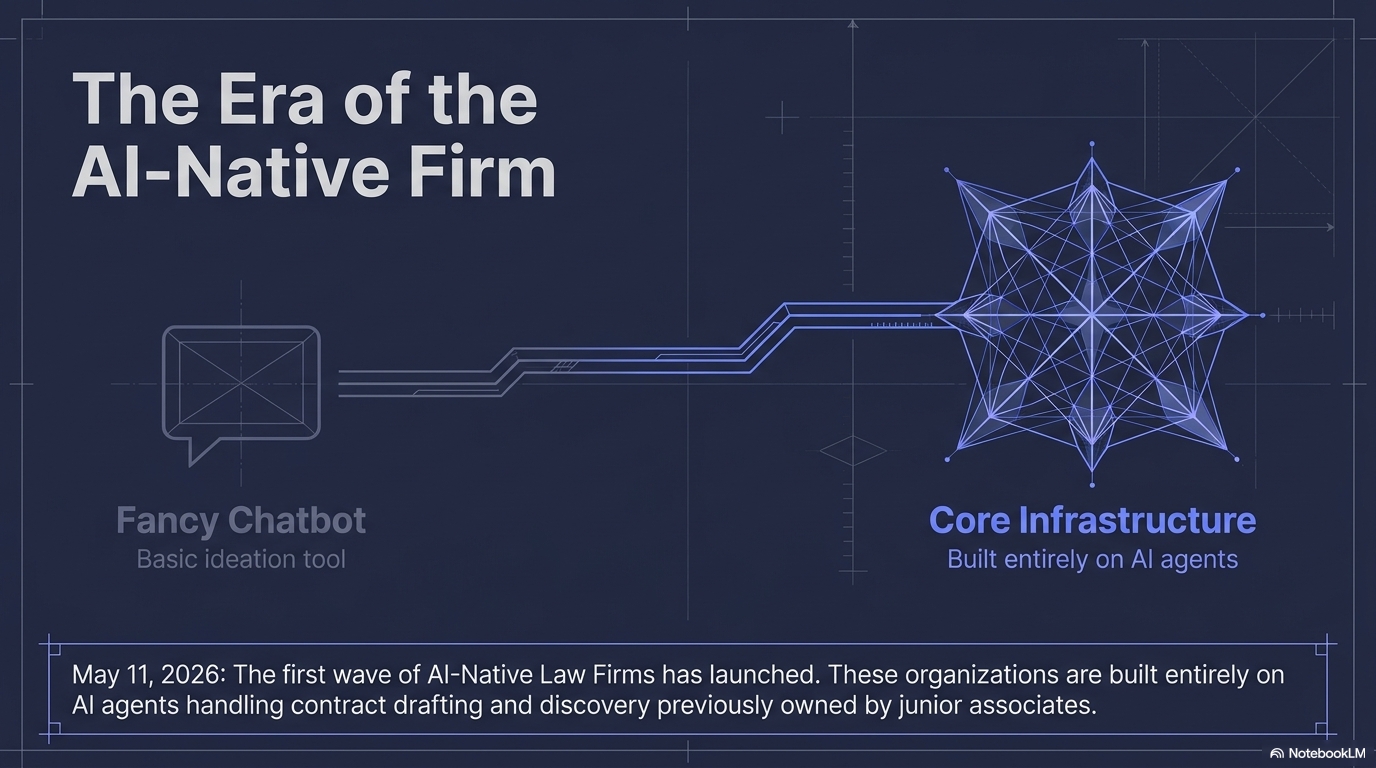
We are witnessing a critical shift in how the professional world views AI. It is moving from a “fancy chatbot” to a core infrastructure element in high-stakes fields like law and medicine. But as the tech gets more serious, the ethical “bill” is coming due.
The Weekly Headline: The Rise of “AI Native” Law Firms
This past week, a new phenomenon has taken hold in the legal industry: the launch of the first wave of “AI Native” Law Firms. These firms are not just using AI; they are built on it, using AI agents to handle contract drafting and discovery that was previously the domain of junior associates.
The ethical tension? These firms are bypassing traditional “billable hours” for work done by machines, leading to a massive debate over fee-splitting with non-humans and the “unauthorized practice of law” by algorithms. Legal ethics boards in multiple jurisdictions are now scrambling to decide: if a machine does 90% of the work, but a human signs off, who owns the responsibility (and the profit)?
The Takeaway: Professionalism is the New Premium
When AI can draft a contract or a medical report in seconds, the “commodity” value of that work drops to zero. This is exactly what we teach at AI Talks @ Younifest: if a machine can do it, it’s no longer a high-value service.
Most people are worried about AI replacing their jobs. They’re missing the point. AI isn’t replacing the lawyer; it’s replacing the clerk. The value has shifted from “the person who writes the document” to “the person who guarantees the document.“
As an AI Architect, you must stop selling your labor and start selling your judgment. In an AI-native world, your ethical oversight isn’t a hurdle—it is the very product your clients are paying for. Don’t bill for the hour. Bill for the accountability.
3. Prompt of the Week: The Liability Auditor
This prompt helps students understand the gap between AI output and professional responsibility.
Copy and paste this into your AI of choice:
“I am using AI to generate a professional [Insert Artifact: e.g., Service Contract, Technical Specification, or Medical Summary]. Act as a Professional Liability Auditor. Review this output and identify three ‘Logical Hallucinations’ or ‘Edge Case Failures’ that could result in a lawsuit or professional failure if a human does not manually verify them. Then, write a ‘Human Certification Statement’ that a professional would need to sign to take full legal responsibility for this specific document.”
The Machine is Moving.
The “AI Native” firm is a preview of every industry’s future. The winners won’t be those with the fastest AI, but those with the most trusted human architects.
Next Step: With “AI Native” workflows becoming common, would you like me to draft a “Human Oversight Disclosure” template for your students to include in their professional service agreements?
AI Native Firms and Legal Ethics
This video explores how AI is reshaping higher education and professional ethics, providing a broader context for the emerging “AI Native” economy.